Apollo AyurVAID is a NABH-accredited network of integrated Ayurveda hospitals delivering “Precision Ayurveda” — an approach that combines classical Kerala traditions with modern diagnostic intelligence.
CLIENT
Apollo AyurVAID Hospital
PROJECT
Retail | Healthcare Environment Design
A cohesive spatial framework was developed to translate the philosophy of Precision Ayurveda into a consistently warm, intuitive, and human-centred environment — implemented across multiple cities with sensitivity to context, culture, and function.
Apollo AyurVAID operates at the intersection of traditional healing and contemporary medicine. The spatial challenge was to recalibrate perception — shifting the environment away from clinical detachment toward reassurance and clarity, without compromising operational precision.
Rather than designing isolated rooms, the project was structured
as a behaviour-driven spatial system — responding to human psychology, movement patterns, and degrees of privacy across
the built environment.
The architectural system unfolds through a clear sequence:
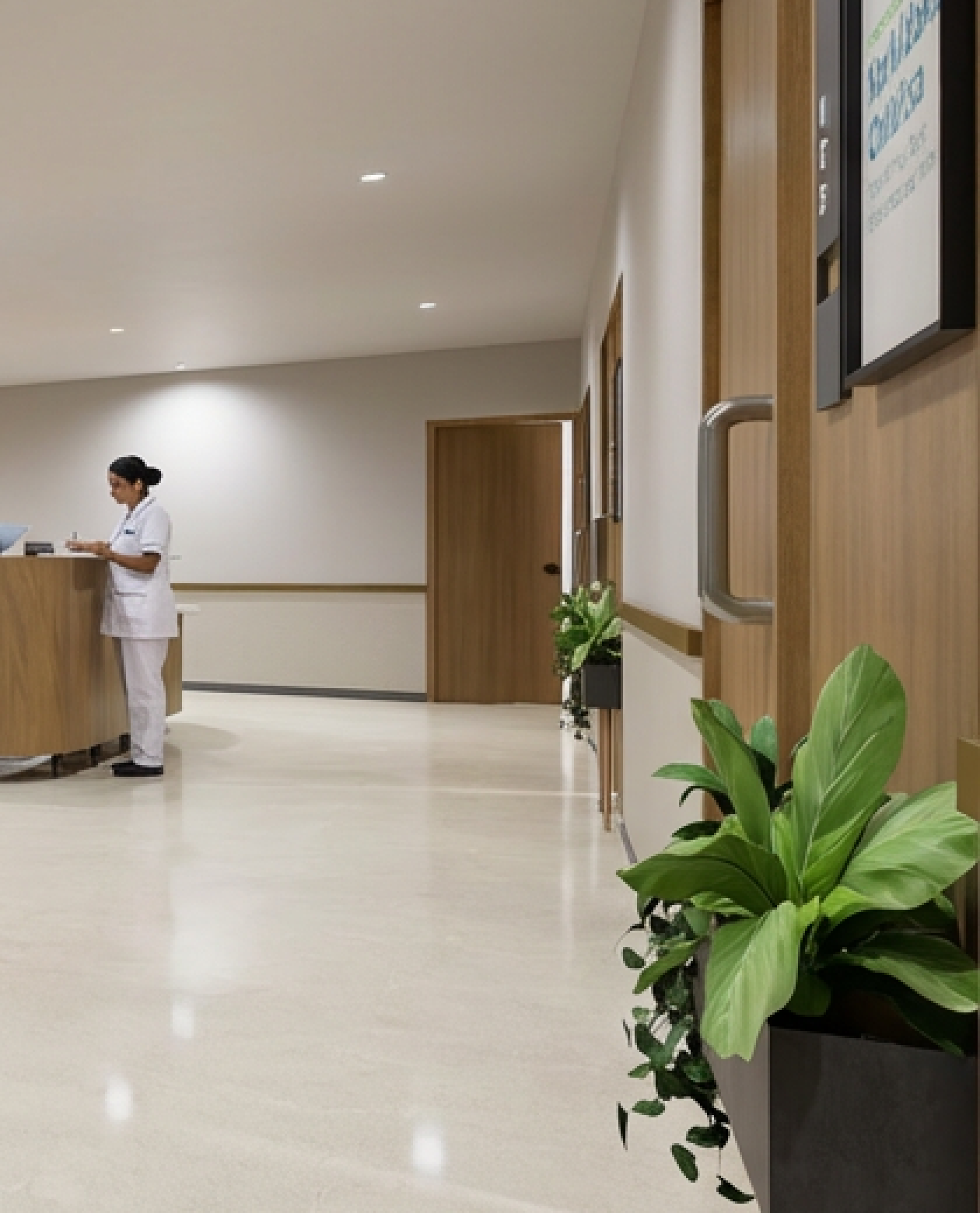
Arrival → Assistance → Pause → Dialogue → Therapy → Recovery
Each typology operates as a distinct yet interconnected environment, governed by its own material, lighting, and spatial logic.
Designing a Scalable Healthcare System Rooted in Behaviour and Context
—
Entrance Interface:
Redefining the Clinical Threshold
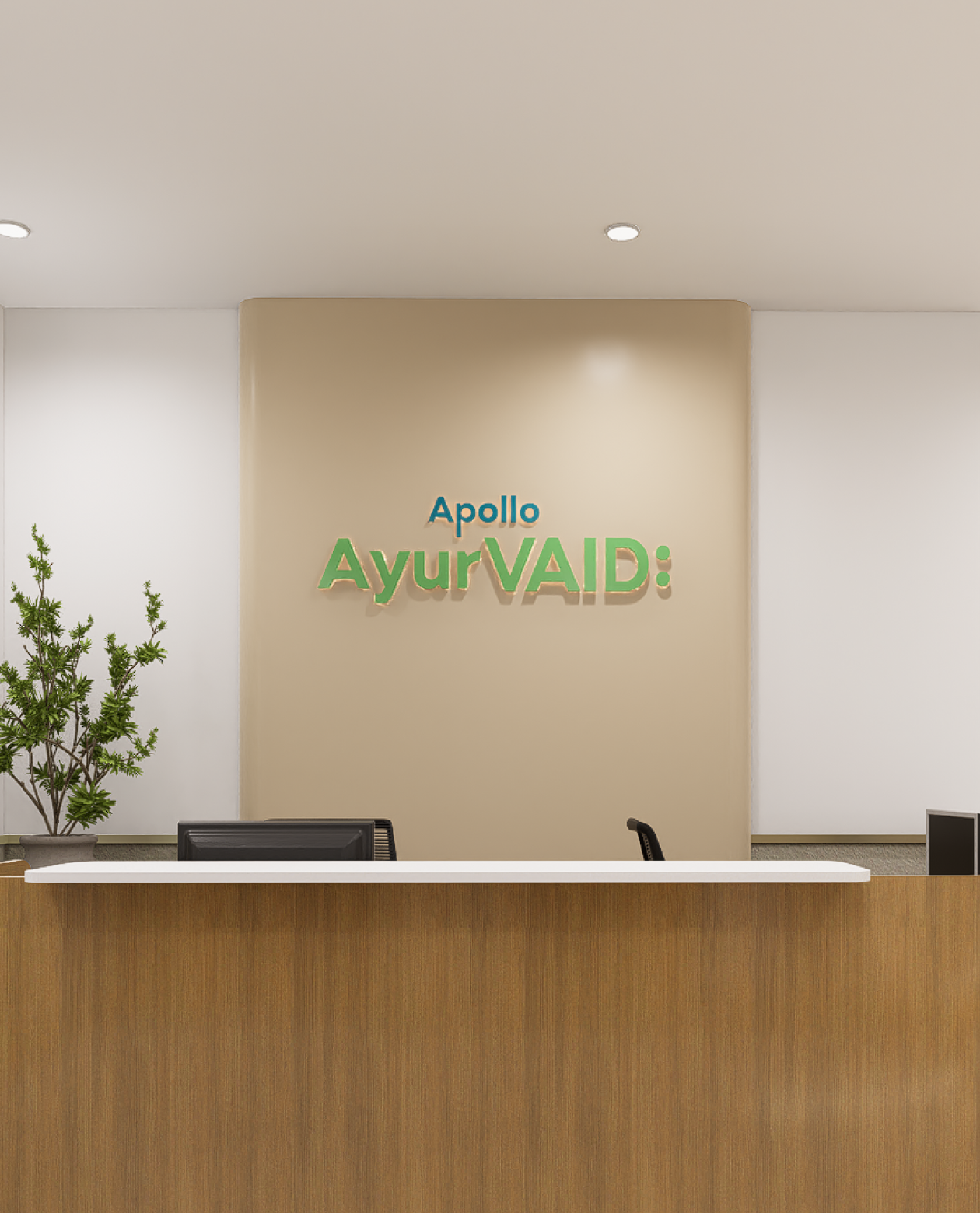
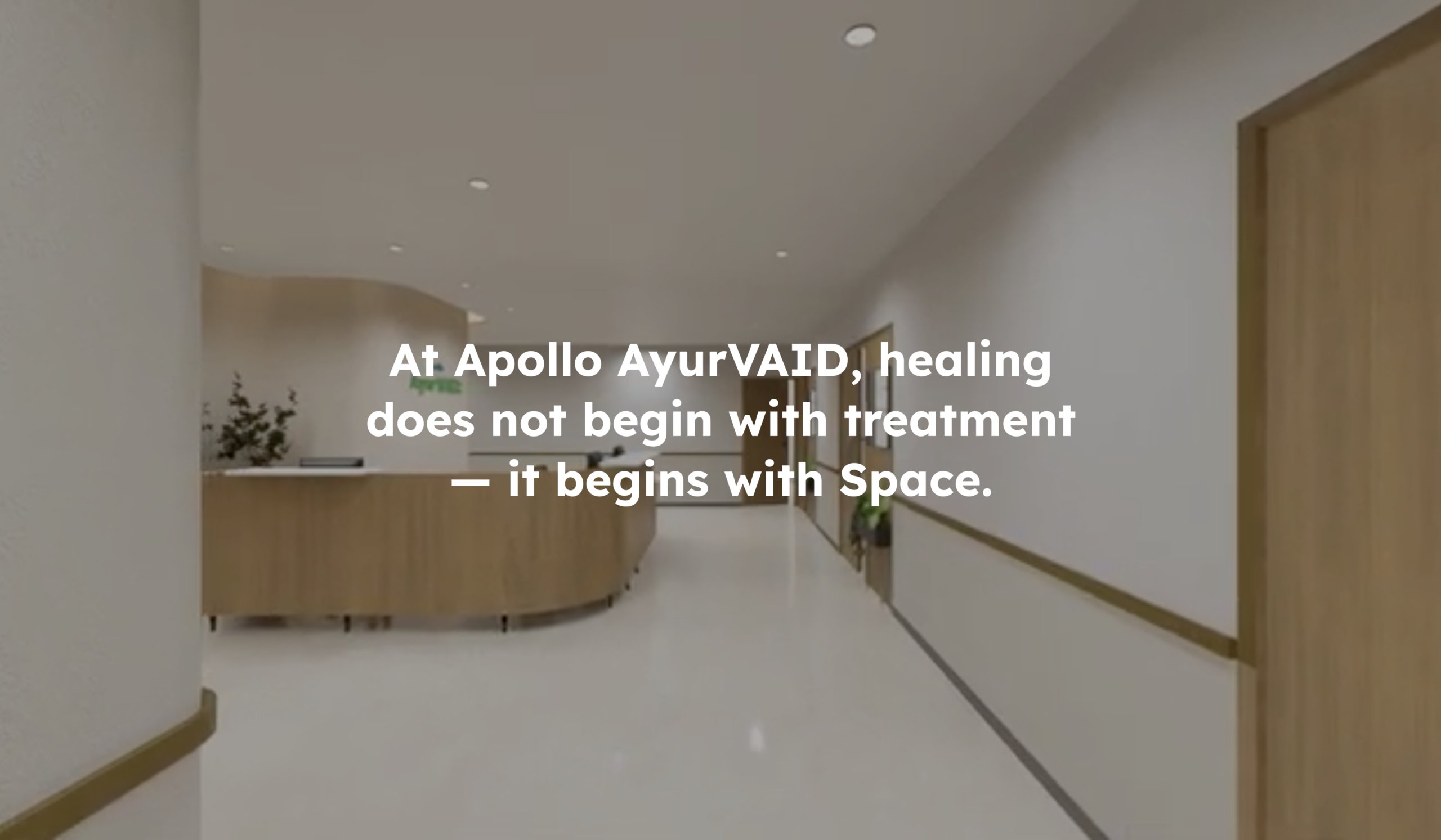
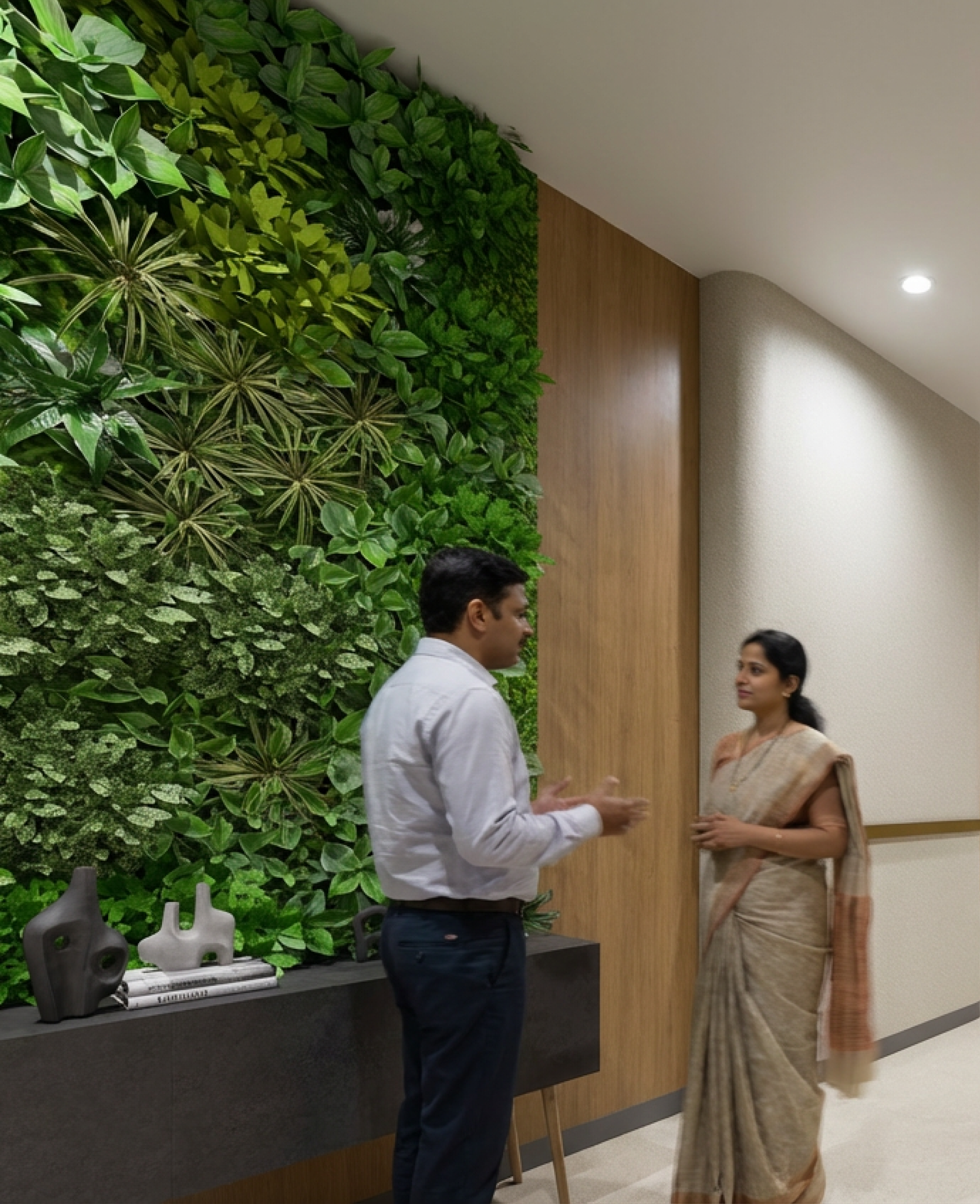
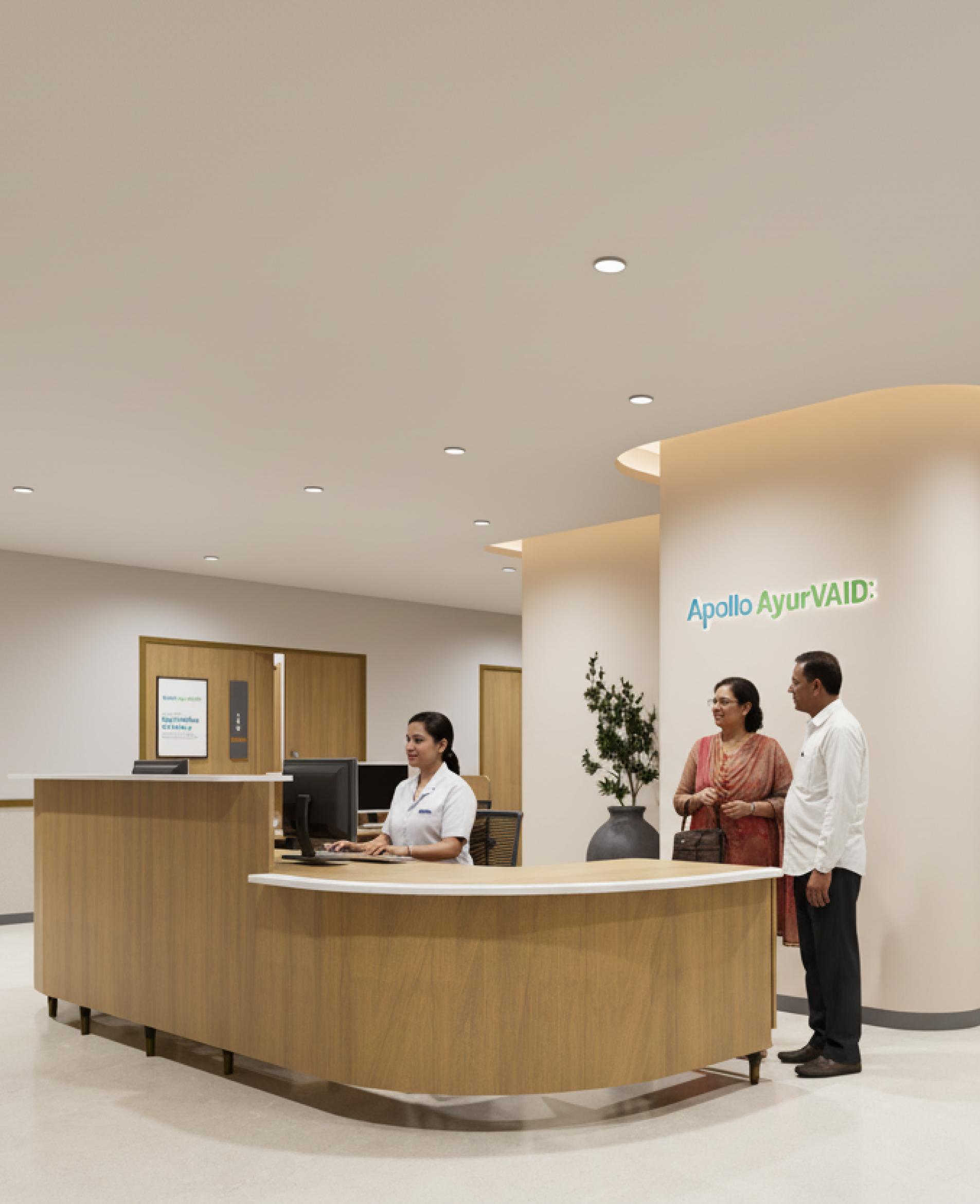
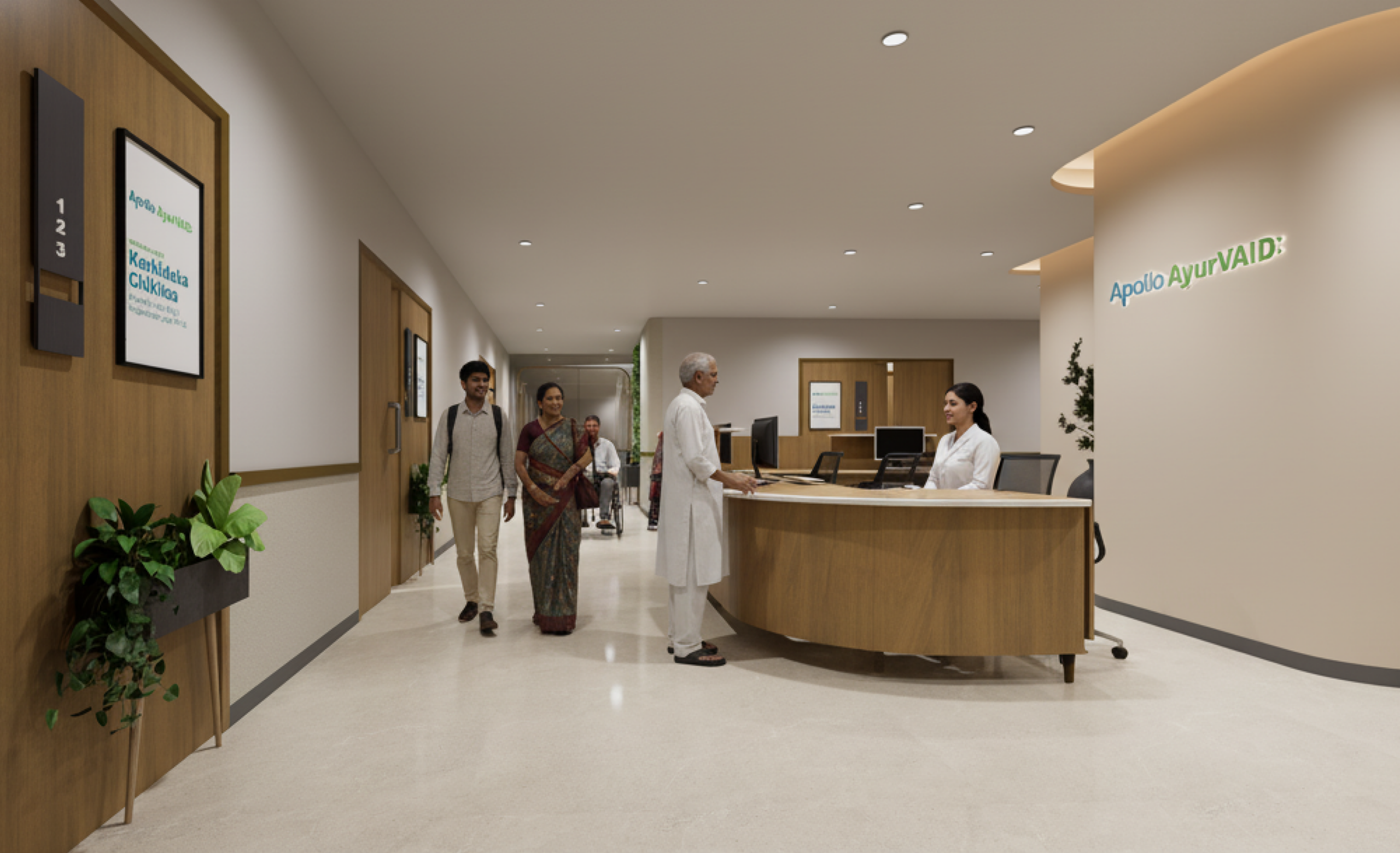
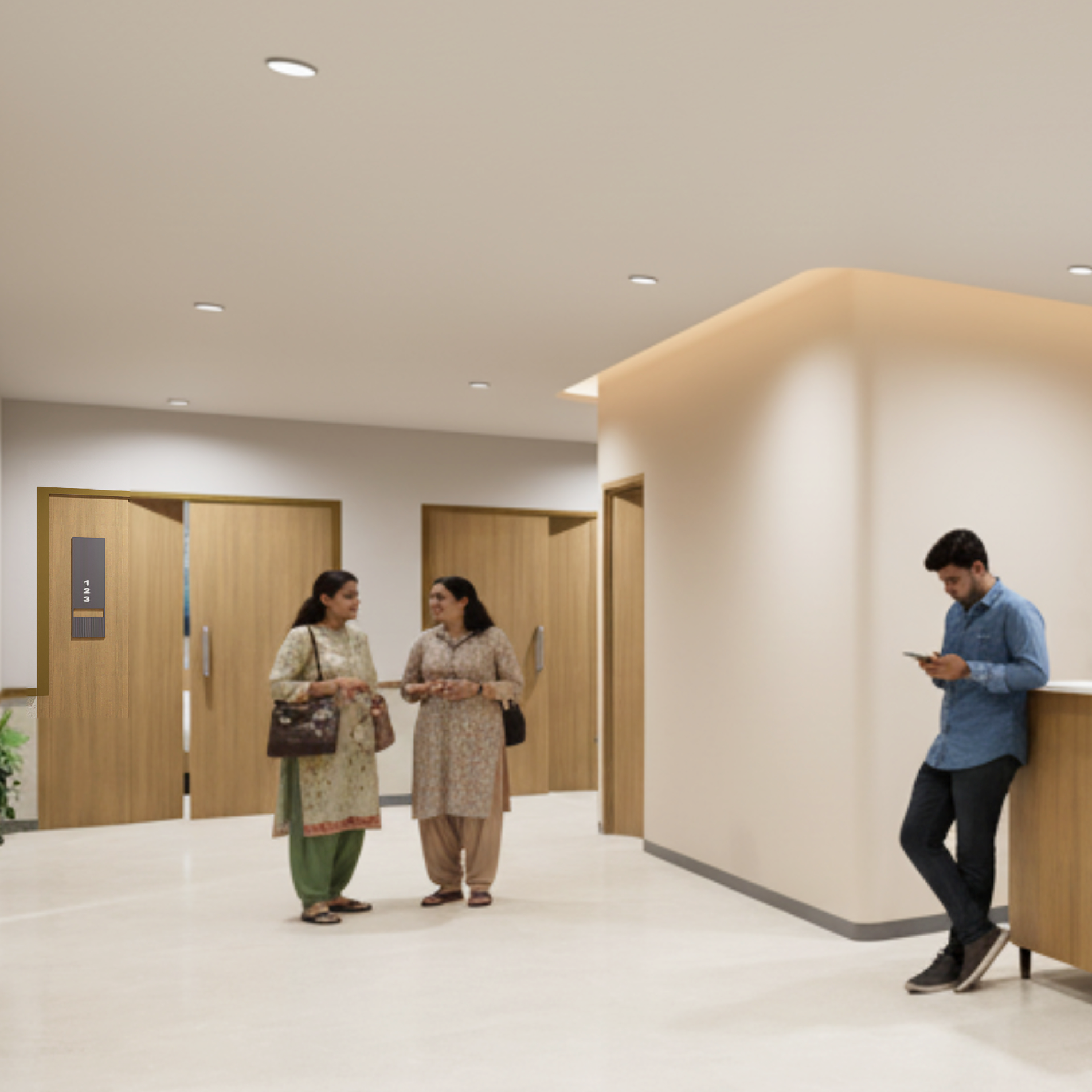
The reception space challenges conventional healthcare formality by dissolving rigidity through gentle, curved forms and warm, tactile materials. Engineered timber replaces sterile surfaces, while diffused ambient lighting displaces harsh clinical glare.
Rooted in biophilic principles, integrated green walls and natural textures foster a subtle connection to nature — reducing stress and enhancing sensory comfort at the very first point of contact. This calibrated spatial threshold offers a first impression that is intuitive, calm, and reassuring — where the brand is woven into the architecture rather than applied as ornamentation.
Waiting Lounge:
Designing Waiting as Comfort
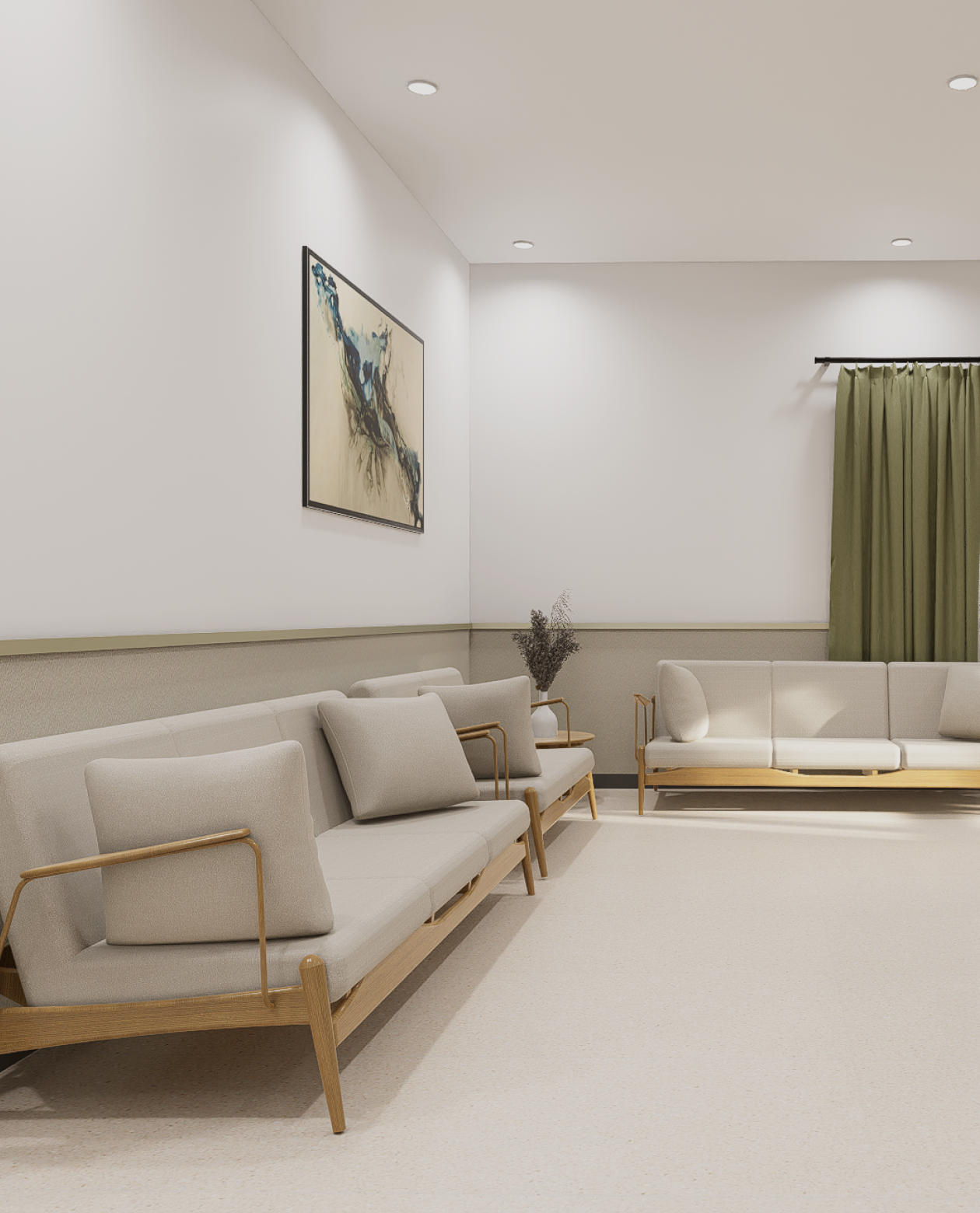
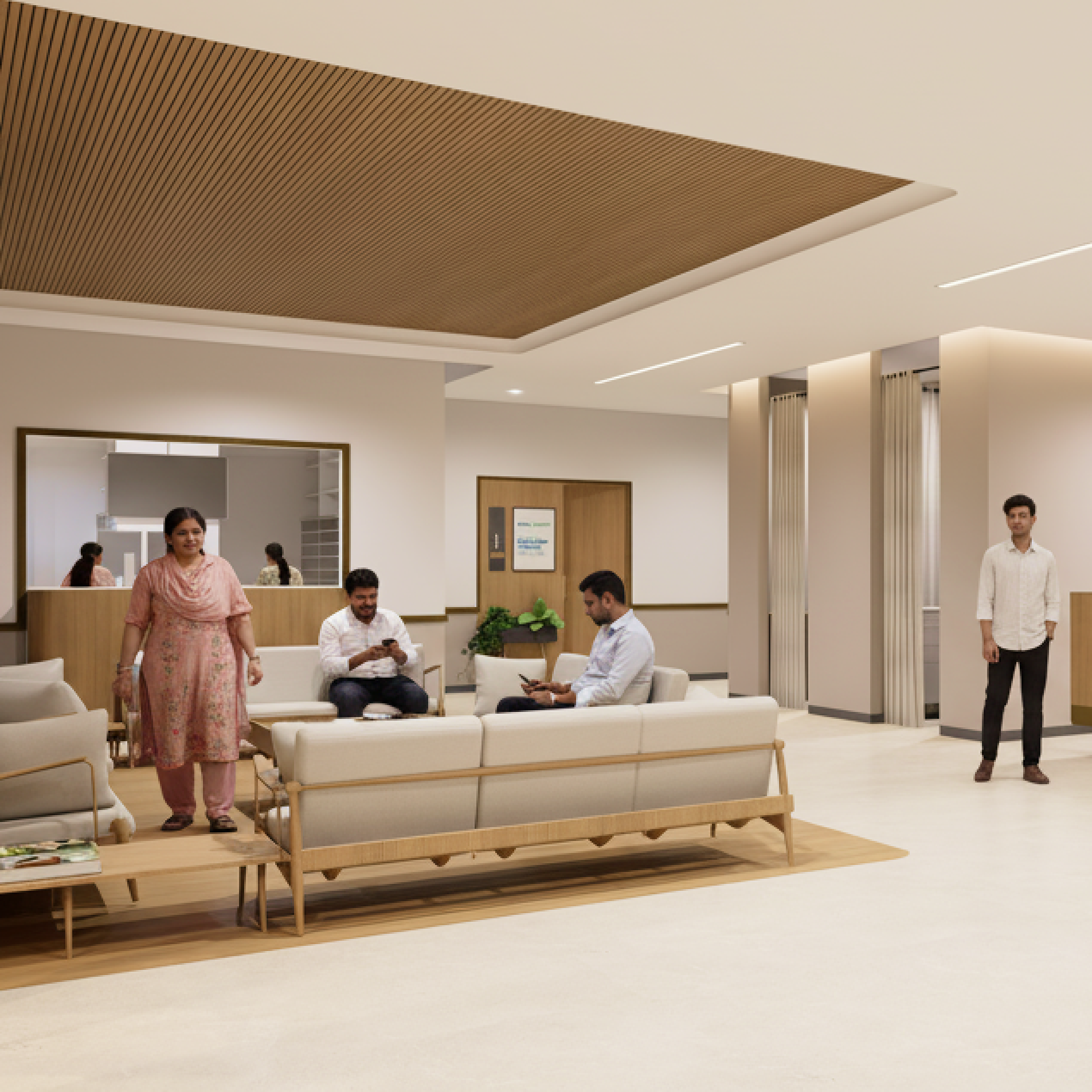
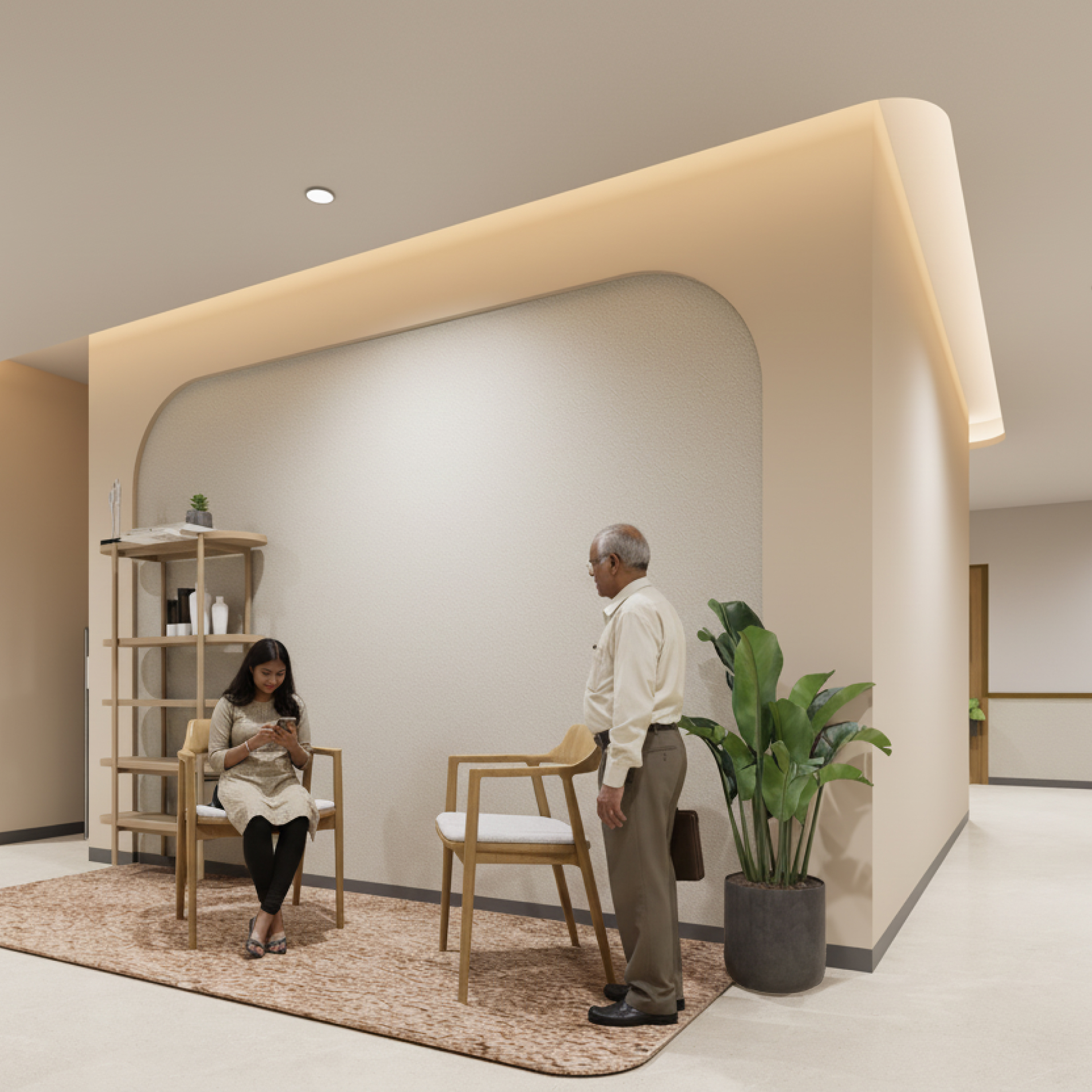
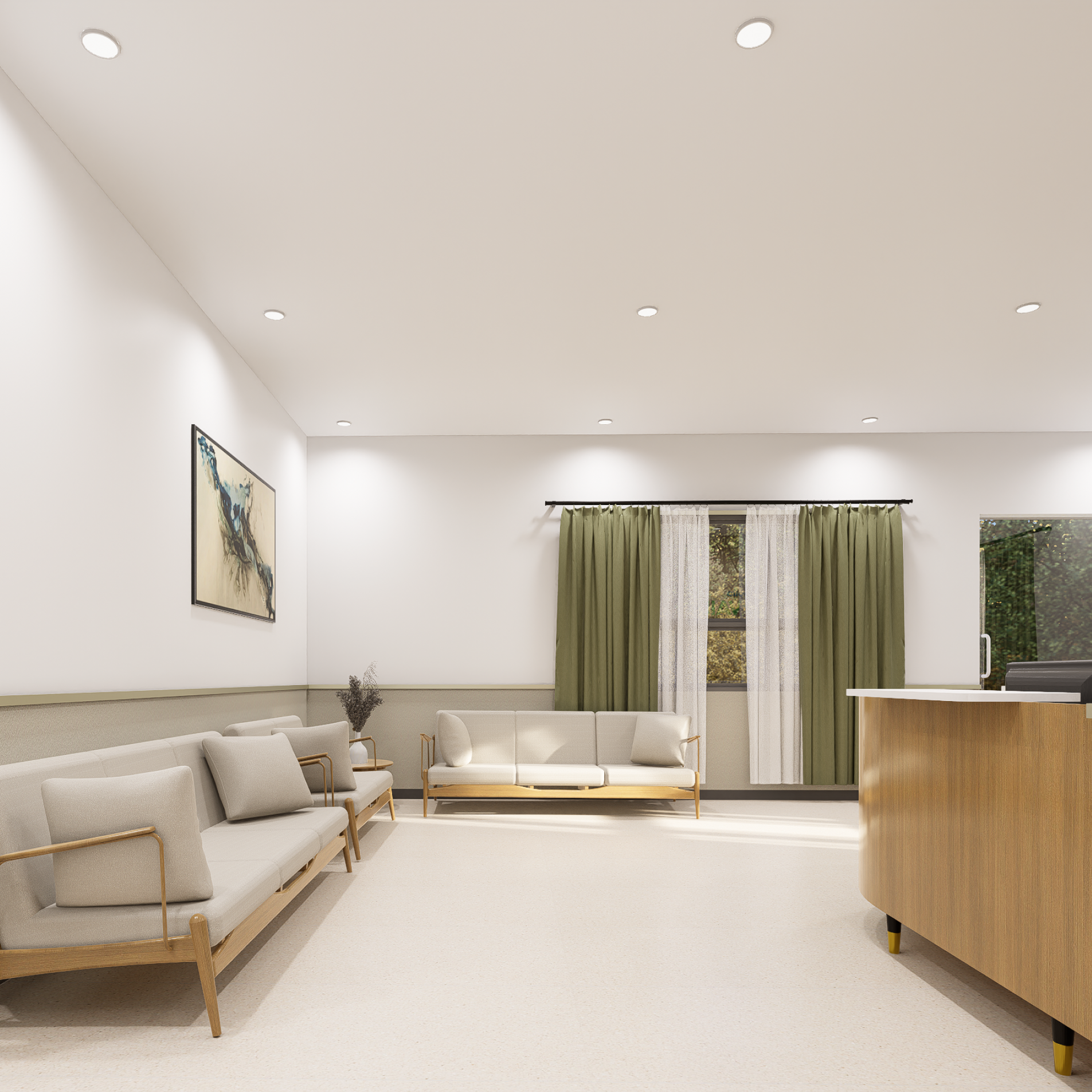
Waiting is often where anxiety peaks, yet in a healing environment it can be a moment of composure. Here, clustered seating replaces regimented rows, enabling family proximity without crowding. Generous circulation allows visual breathing space, while carefully placed biophilic elements and soft olive accents bring a quiet grounding. The lounge becomes a buffer — designed for stillness, not suspension.
Consultation Suites:
Dialogue Over Diagnosis
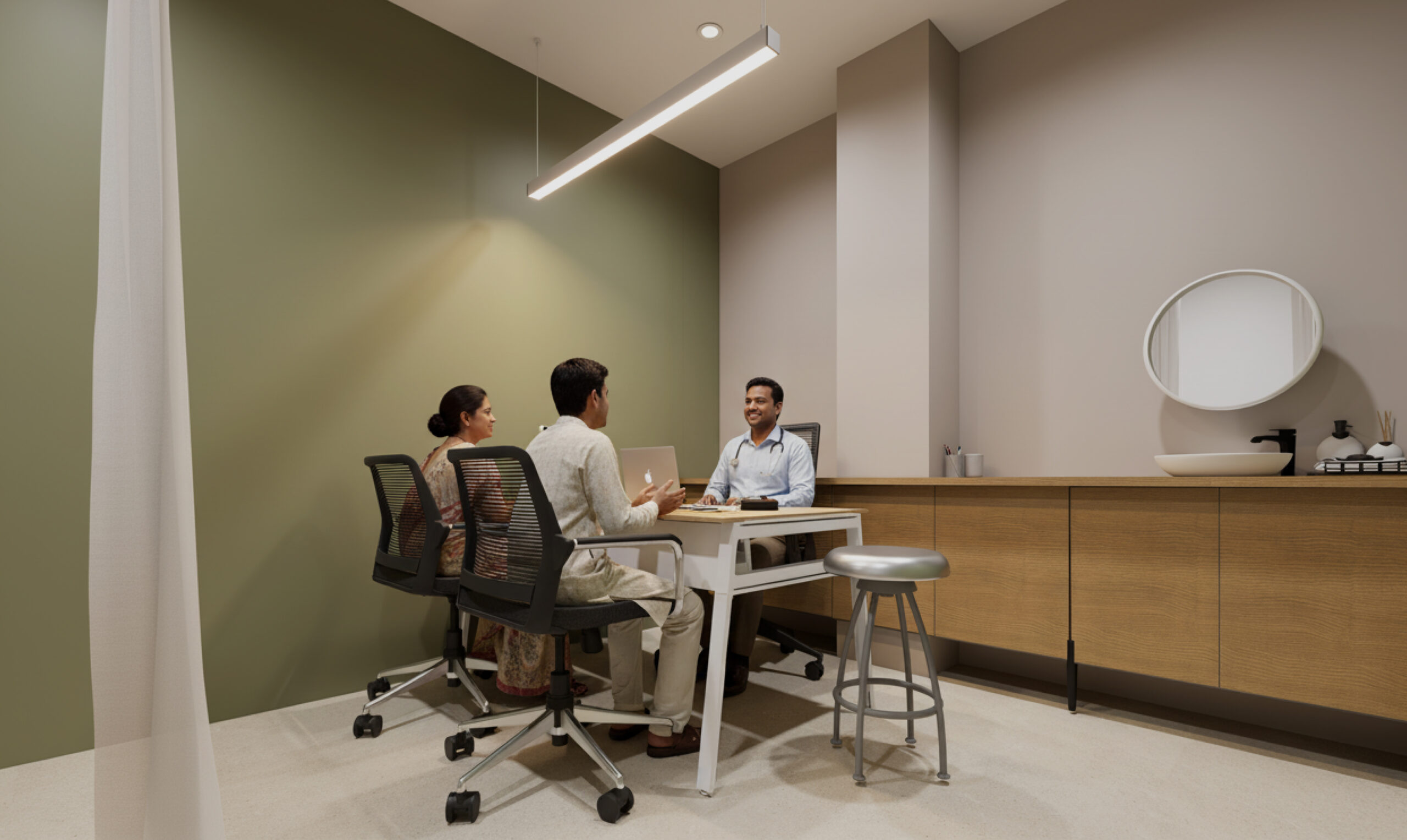
Consultation rooms are structured to feel less hierarchical and more conversational. Furniture positions are non-confrontational, neutral backdrops minimize distraction, and layered lighting is warm and directional rather than overhead glare. The suite becomes an environment that supports attentive exchange and human connection.
Therapy Rooms:
Precision Meets Ritual
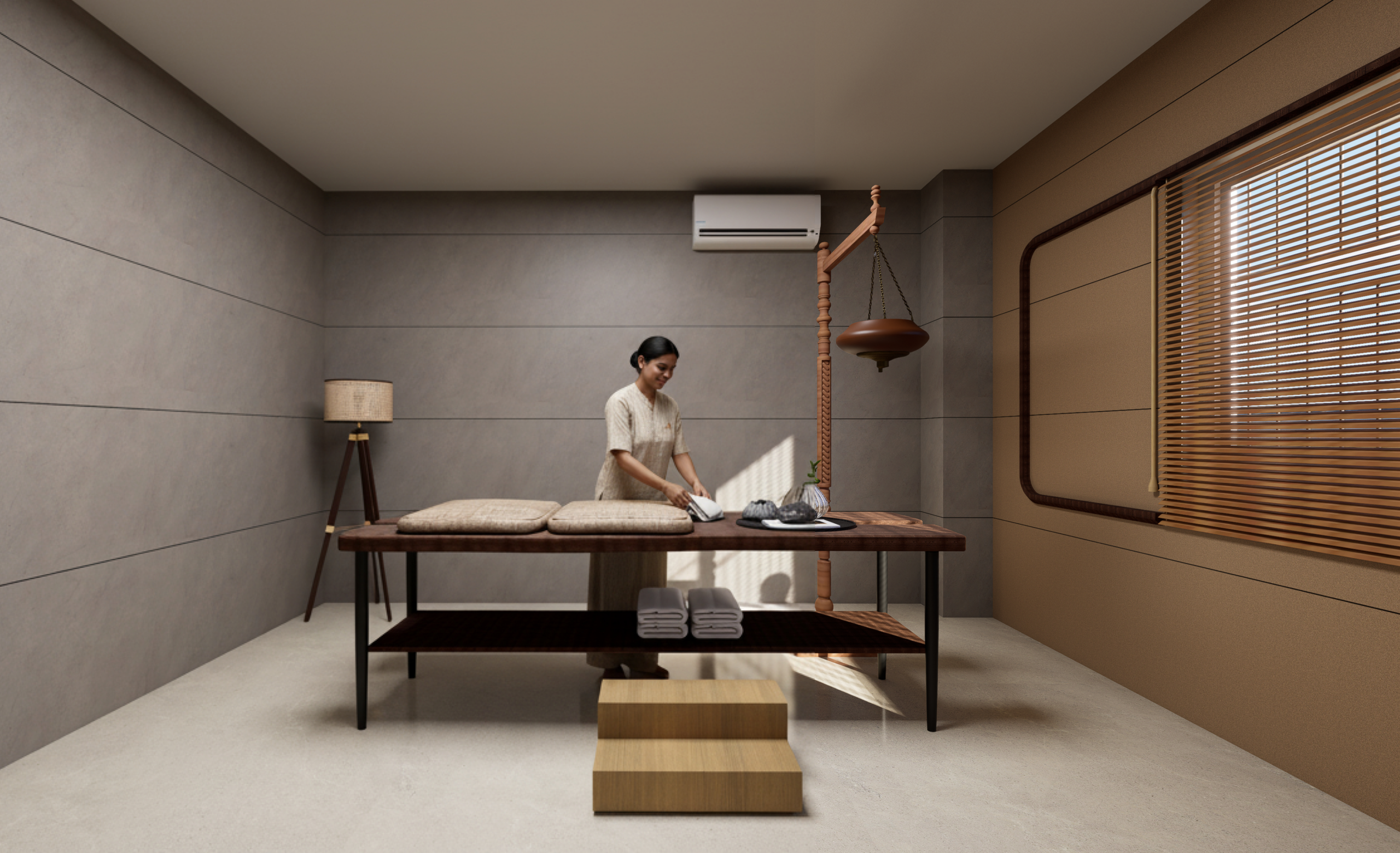
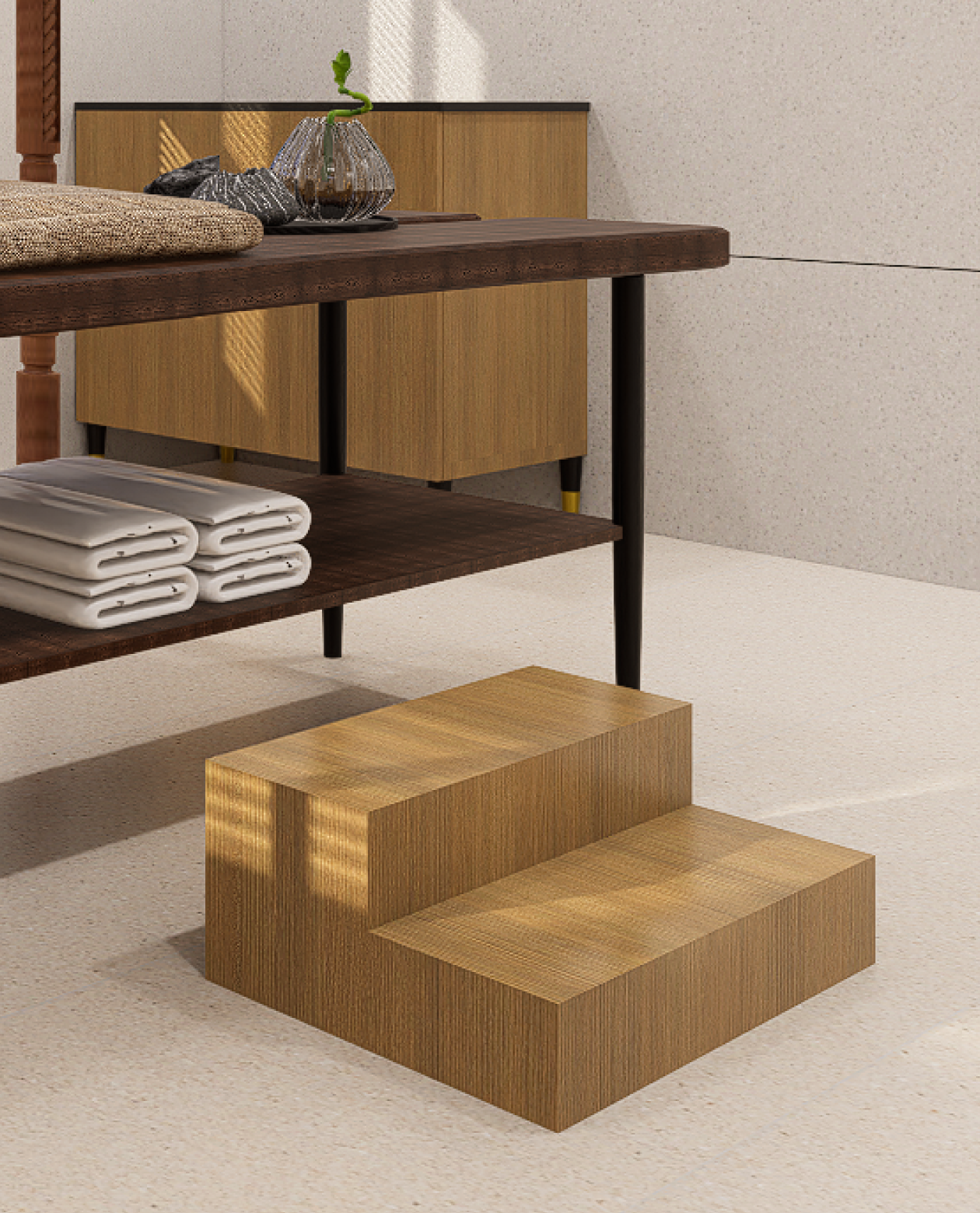
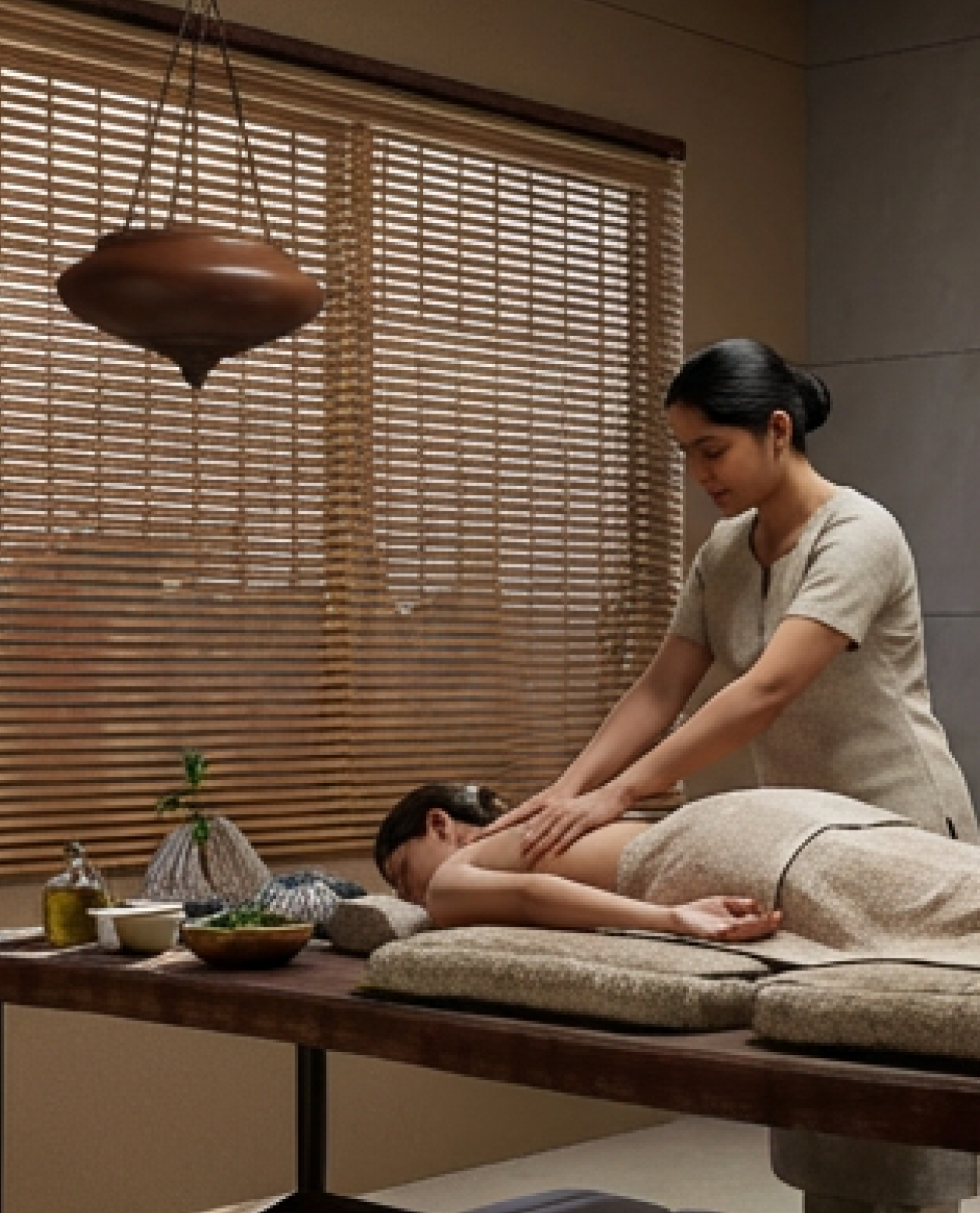
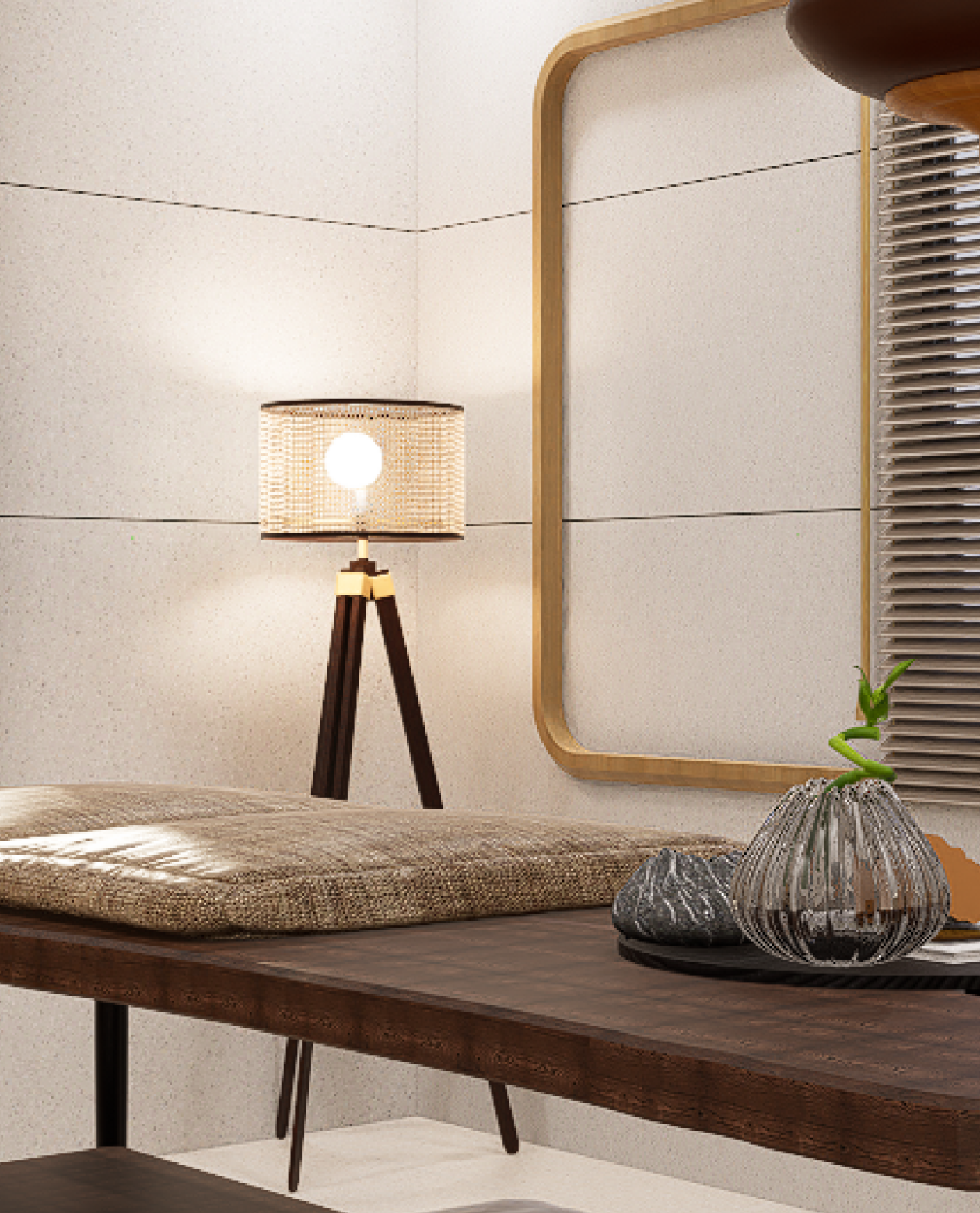
Therapy rooms reinterpret elements of Kerala Ayurveda through contemporary architectural language. Wooden therapy supports, textural layering, and controlled ambient light create warmth that both respects ritual and satisfies modern hygiene requirements. Built precision dissolves nostalgia, reinforcing therapy as an intentional spatial experience.
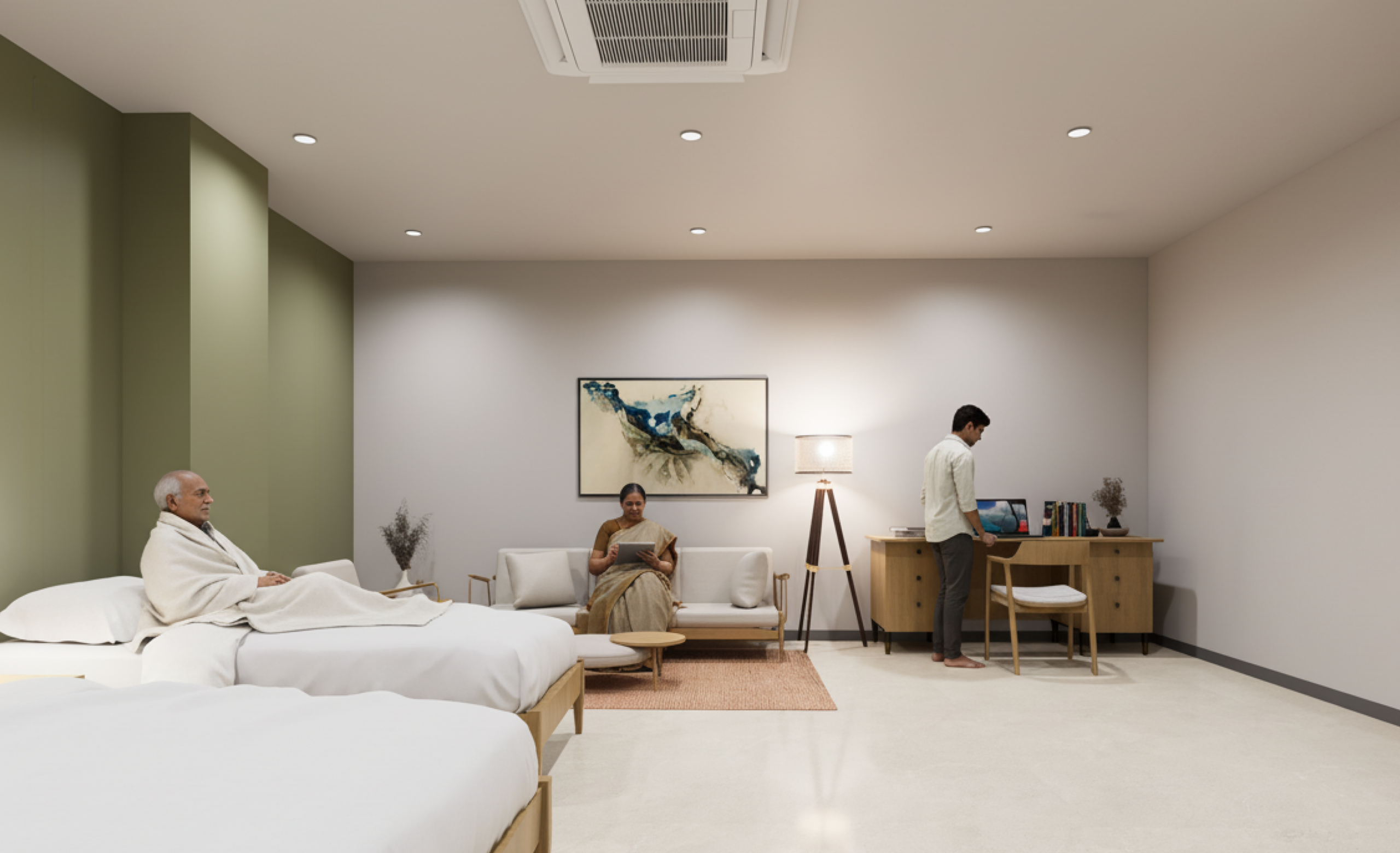
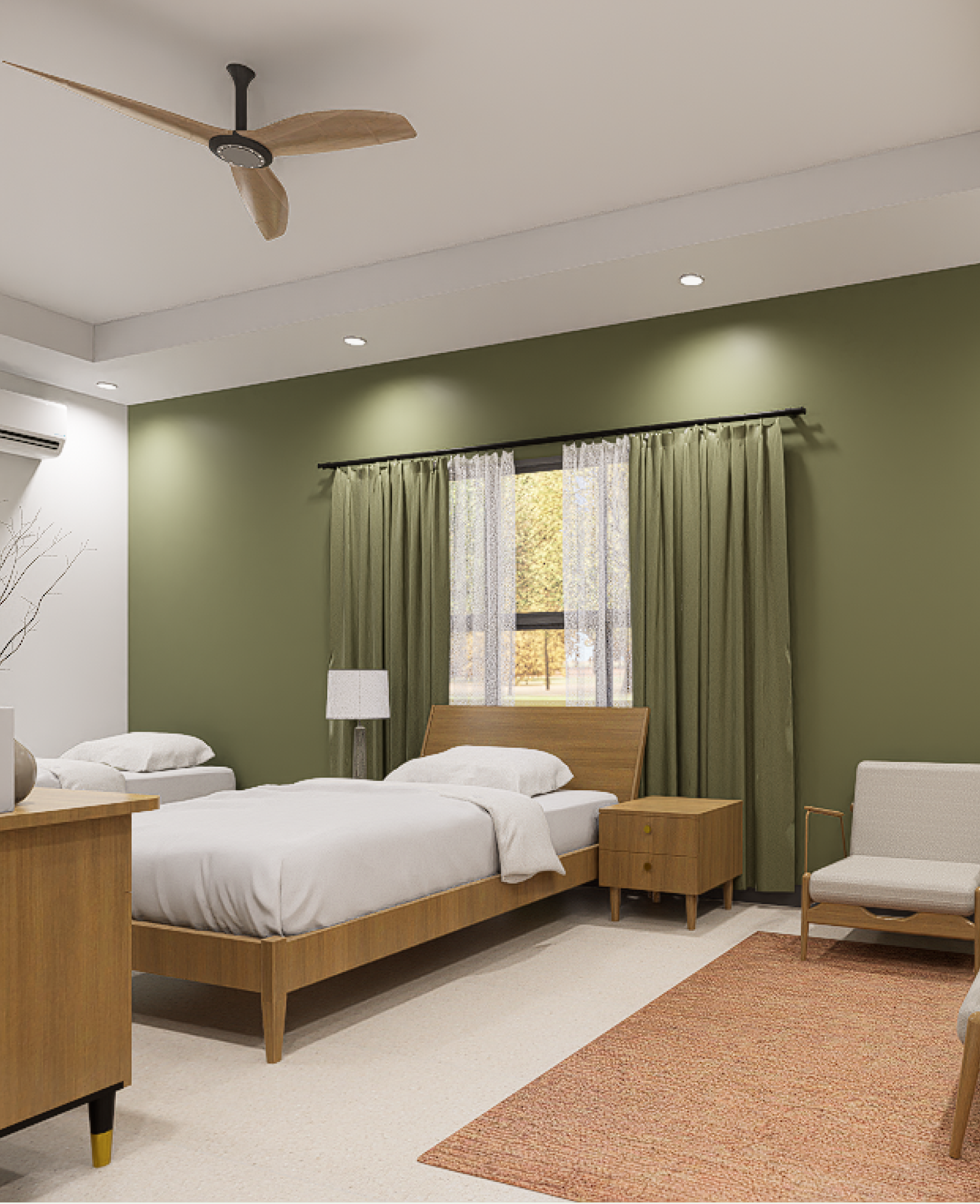
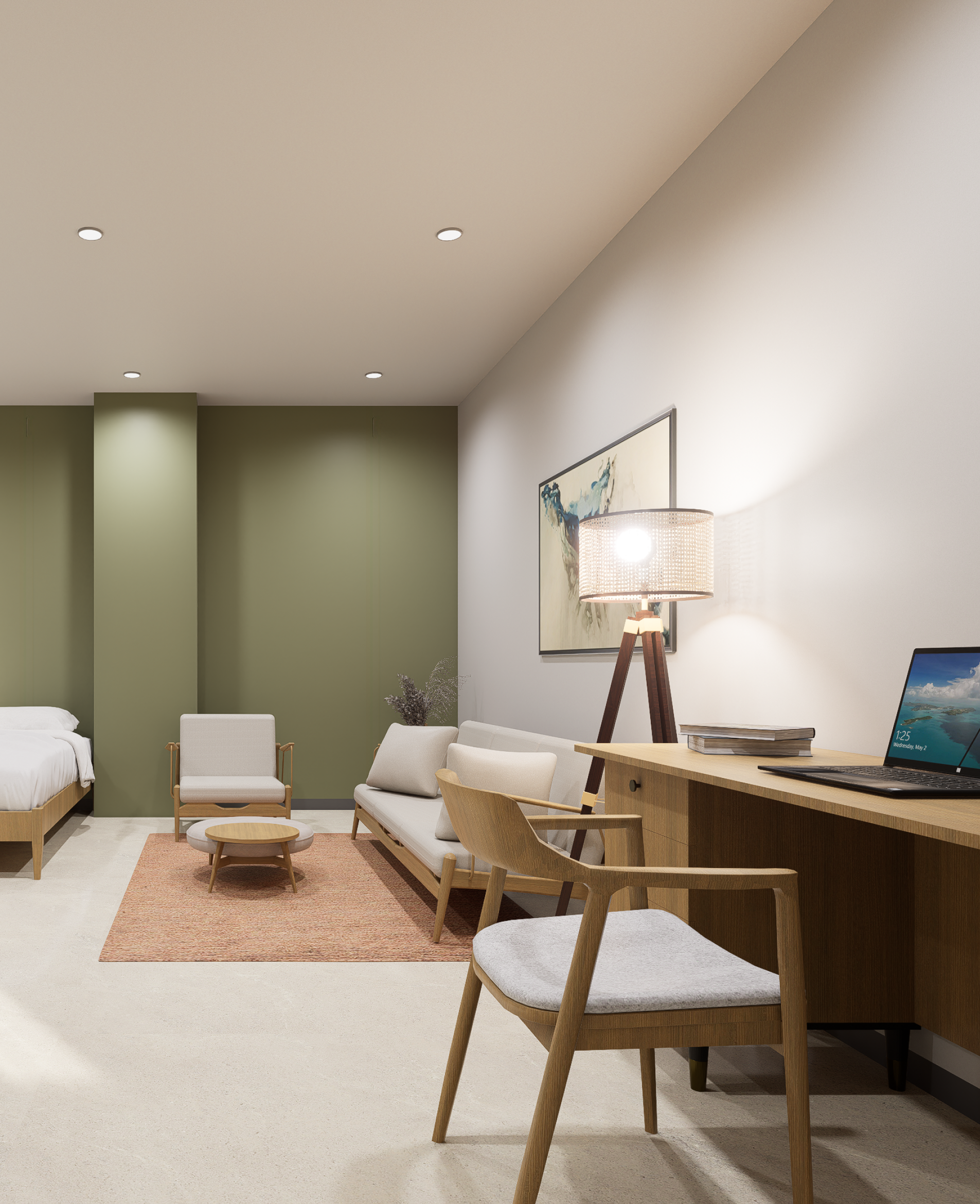
In-Patient Suites:
Rest as Structure
Patient rooms are composed with restraint — balanced proportions, muted palettes, and abundant natural light define the suite. Minimal ornamentation ensures nothing competes with rest; spatial sequences gently transition from public to private while maintaining psychological ease.
Healing as Spatial Discipline
From crafted furniture to calibrated layouts, each design decision supports clarity, comfort, and care. The space is not styled — it is structured to heal.